
If the 2000s taught Japan's missionary community to think globally, the 2010s taught it to think locally, patiently, and together. The decade opened with centenary fanfare and closed with candid talk of burnout, succession, and shrinking numbers — and in between, on a March afternoon in 2011, the ground itself moved. Everything in these pages after that date is, in some sense, written in the light of it.
The decade began looking outward. Tokyo 2010, the Global Mission Consultation at Nakano Sun Plaza, marked the centennial of Edinburgh 1910 and celebrated a mission enterprise whose leadership had shifted decisively toward the Majority World; that October, Cape Town 2010 gathered 4,200 delegates from 198 countries, with Japanese participants returning to debrief the Congress for the Kanto region. The magazine of those years carried David Geisler's four-part series on conversational apologetics, Gary Fujino's profile of the Hallelujah Gospel Family choirs — one in 2000, forty by 2010 — and Kenny and Lila Joseph's "Called Home" columns, patiently cataloguing generations of missionaries, many of them women, whose names risked being lost.
Then March 11. The Spring 2011 issue was rebuilt in about a month by editors pulled directly out of relief work: eyewitness accounts from Kesennuma, Ishinomaki, Onagawa, Iwaki; CRASH Japan's command center and regional bases; theodicy essays; PTSD checklists; frank writing about the evacuation choices that divided the community. "We don't have the same resources as the government or Red Cross," Jonathan Wilson of CRASH Japan said, "but we have something these people desperately need… hope." The issues that followed traced the long descent from adrenaline into endurance — emotional care, coordination gaps, the fear that openness would fade as it had after Kobe. One Rifu pastor put the lesson bluntly: "Don't send fifty volunteers from America for a week, sponsor one Japanese Christian to commit full-time for fifty weeks."
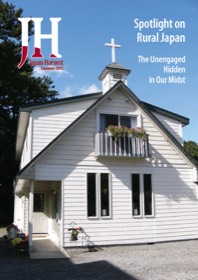
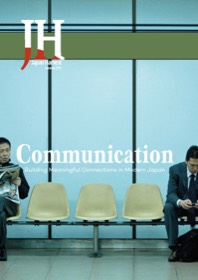
The middle years turned that lesson into method. Diaspora and returnee ministry became a central frame — Japanese abroad, and the returnees flowing home. The Rural Japan Church Planting Network launched to address some 1,500 unchurched rural areas. John Mehn's long series on reproducing churches ran alongside issues devoted to member care, third culture kids, language, and Shinto and Buddhist categories as bridges rather than obstacles. Where an earlier era might have preached endurance, these pages named loneliness, marital strain, gossip, and isolation as ministry-threatening realities requiring structure.
The closing years widened and sobered at once. Issues took up aging Japan, youth suicide, hikikomori, burakumin, the Deaf, the disabled, the homeless, tentmakers outside agency structures. Five years on from 3.11, CRASH Japan handed leadership to Japanese pastor Toshio Nagai; Nozomi and Megumi Projects turned tsunami debris and vintage kimono into enterprises run by Tohoku women. And a 2019 infographic drew the plain line: missionary numbers peaked at 2,844 in 1987 and have declined since.
What the decade contributed was a change of posture — from missionary-plants-then-hands-off to partnership from day one. "I like rice; my wife prefers bread," Pastor Tomohiro Naitō told this magazine. "That doesn't mean we have to fight." The 2010s made that ordinary sentence a strategy.
Voices of the decade
Don’t send fifty volunteers from America for a week, sponsor one Japanese Christian to commit full-time for fifty weeks.
Thanks for not forgetting us.
Every decade since 1952 could read like this.
This chapter was drafted by machine-reading the full text of every issue in the decade — a concept sample. The same process can retell all seven decades of Japan Harvest: the community's own story, told back to it.
Explore the archive →Concept sample: drafted by AI from the complete OCR text of each issue, then lightly edited. Quotes are verbatim from the issues. Covers © Japan Harvest. Subject to JEMA editorial review before any publication.