If the 1950s were about arrival, the 1990s were about examination. Across this decade, Japan Harvest turned the lens around. Issue after issue, the question shifted from why is Japan so resistant? to what about us needs to change? — a community fifty years into its work in Japan, still hovering near one percent, deciding that honest self-scrutiny was more useful than blaming the soil.
The decade opened with that pivot already in motion. Stan Dyer's 1990 cover feature compared first-century Rome to modern Japan and concluded that the real roadblocks to church growth were internal — poor self-image, weak pastoral leadership, thin fellowship, weak Bible teaching. Doug Heck put the same point more bluntly in 1991: "We don't especially like to face facts, but when you inform people in your home country of the spiritual need here in Japan, have you changed the percentage figure for Christians here in Japan? Probably not." Meanwhile the world outside was moving fast. The Daijōsai enthronement rites raised church-state questions the community argued over in print. Asia Missions Congress '90 in Seoul drew 1,300 delegates from fifty nations and signaled that missions were no longer a Western enterprise. And Japan's own affluence was dissolving the old methods: the tent campaigns and street preaching that reached a hungry postwar generation gave way to golf ministries, chapel weddings, video lending, and Valentine's banquets.
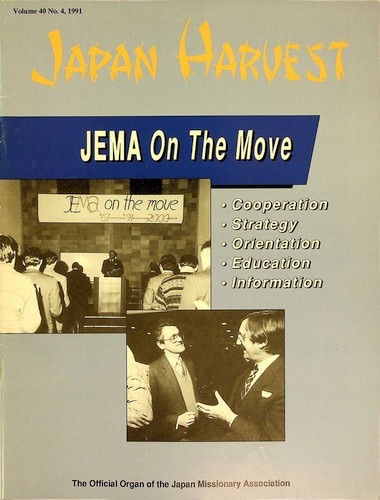
The middle years brought professionalization and then rupture. JEMA built orientation programs, a computer bulletin board, a Church Planting Institute, missionary member care, a Women in Ministry Commission — and in 1994 named Katie Sisco its first female editor-in-chief. Then came January 17, 1995. The Kobe earthquake filled an entire issue with relief runs, grief, and unexpected openness; two months later, the sarin attack on the Tokyo subway. Neil Verwey, forty years in Japan, named the change in a single line: "Before, people wept their way to the Lord: now people argue."
The second half of the decade carried a different weight — memory and reckoning. The fiftieth anniversary of the war's end produced not triumphalism but confession. Rev. Koji Honda, the evangelist called "Japan's Billy Graham," stood before his community in 1995 and said, "I am a coward, the chief of sinners," naming his wartime compromise with State Shinto and Japan's aggression against Korea, China, Taiwan, and the Philippines. Reconciliation services with British POWs followed. Alongside this, the harvest field itself widened: Brazilian-Japanese dekasegi workers, Chinese and Iranian and Filipino communities, returnees converted abroad, Japanese missionaries sent out to Nepal and the Philippines.
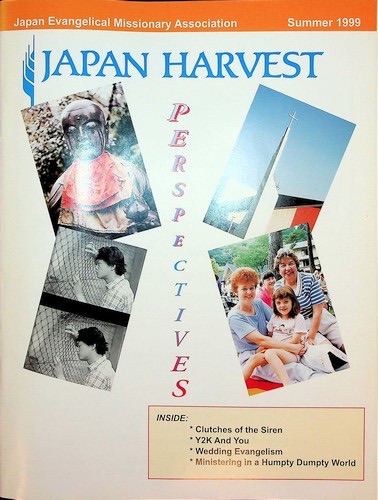
The decade closed anxious and prayerful — Y2K checklists, the Nagano Olympics coffee house, quarterly national days of prayer, and Donnel McLean asking whether Japan was near its last chance.
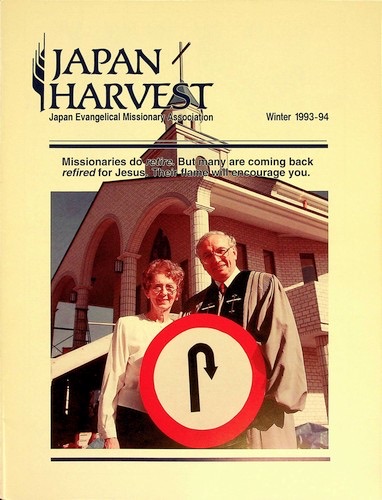
What the 1990s gave this community was maturity, purchased at real cost. It learned to name loneliness, burnout, and its own dysfunctions aloud; to hear Japanese and Korean and Chinese leaders as peers rather than partners; to confess before it counted. The numbers barely moved. Almost everything else did.
Voices of the decade
Why does Korea’s church have such power and Japan’s church so little? The Lord once again strongly showed me that the difference lies in prayer.
We aren’t losing these things, we are returning one thing after another to the Maker.
Every decade since 1952 could read like this.
This chapter was drafted by machine-reading the full text of every issue in the decade — a concept sample. The same process can retell all seven decades of Japan Harvest: the community's own story, told back to it.
Explore the archive →Concept sample: drafted by AI from the complete OCR text of each issue, then lightly edited. Quotes are verbatim from the issues. Covers © Japan Harvest. Subject to JEMA editorial review before any publication.